Meghalaya Travel Guide 2026 — Living Root Bridges, Best Time & Itinerary
Last updated: June 29, 2026
Meghalaya, the “abode of clouds”, is one of Northeast India’s most enchanting states and a destination that has surged in popularity among Indian travellers seeking something different. This is a land of rolling green hills, thundering waterfalls, crystal-clear rivers, mysterious caves and the famous living root bridges — living structures grown over generations from the roots of rubber trees. Add Asia’s cleanest village, some of the wettest places on Earth, and a cool, refreshing climate, and Meghalaya offers an experience unlike anywhere else in the country.
With improved connectivity through Guwahati and Shillong, and a growing network of homestays and guesthouses, Meghalaya is more accessible than ever while still feeling wonderfully off the beaten track. This guide covers how to reach the state, the best time to visit, the unmissable attractions across Shillong, Cherrapunji and the Dawki region, realistic costs in rupees, food, and a sample itinerary to help you plan a trip into this misty, waterfall-laced corner of India.
How to Reach Meghalaya
The usual gateway to Meghalaya is Guwahati in neighbouring Assam, which has the nearest major airport (Lokpriya Gopinath Bordoloi International Airport) with frequent flights from Delhi, Kolkata, Mumbai, Bengaluru and other cities. From Guwahati, the state capital Shillong is about a three-hour scenic drive by taxi or shared cab, making the journey straightforward despite the absence of a major airport within the state itself.
Shillong does have a small airport at Umroi with limited connections, and helicopter services occasionally link Guwahati and Shillong. The most common and flexible approach is to fly into Guwahati and hire a car or join a tour to explore Meghalaya at your own pace, since a private vehicle is by far the most convenient way to reach the state’s scattered waterfalls, villages and viewpoints over the days that follow.
Best Time to Visit Meghalaya
The best time to visit Meghalaya is from October to May, when the weather is pleasant and the skies are relatively clear for sightseeing. The winter months of November to February are cool and crisp, ideal for exploring caves, villages and viewpoints, while the post-monsoon months of October and the spring of March to May bring lush greenery and comfortable temperatures.
Meghalaya is one of the wettest regions on Earth, and the monsoon from June to September brings spectacular, full-flowing waterfalls but also heavy, persistent rain, leeches on trails, slippery paths and occasional landslides that can disrupt travel. If you want to see the waterfalls at their thunderous best and don’t mind the rain, the monsoon has its own dramatic appeal, but for general sightseeing the drier months are far more comfortable.
Shillong: The Scotland of the East
Shillong, the charming hill-station capital, is the natural base for exploring Meghalaya and a pleasant destination in its own right. Set among pine-clad hills, it earned the nickname “Scotland of the East” for its rolling landscape and cool climate. Highlights include the serene Umiam Lake just outside the city, the cascading Elephant Falls, the panoramic views from Shillong Peak, and the bustling Police Bazaar for shopping and street food.
Shillong also has a vibrant music culture — it is often called India’s rock-music capital — along with quaint cafés, colonial-era churches and lively markets such as Bara Bazaar. Spend a day or two acclimatising and exploring the city and its surroundings before venturing further afield to Cherrapunji and the root-bridge country, using Shillong’s wider range of hotels and restaurants as a comfortable launch pad.
Cherrapunji and Living Root Bridges
Cherrapunji (Sohra), one of the wettest places on the planet, is the heart of Meghalaya’s most iconic attractions. The region is dotted with majestic waterfalls including Nohkalikai Falls, India’s tallest plunge waterfall, and Seven Sisters Falls, along with the impressive Mawsmai limestone caves that you can walk through.
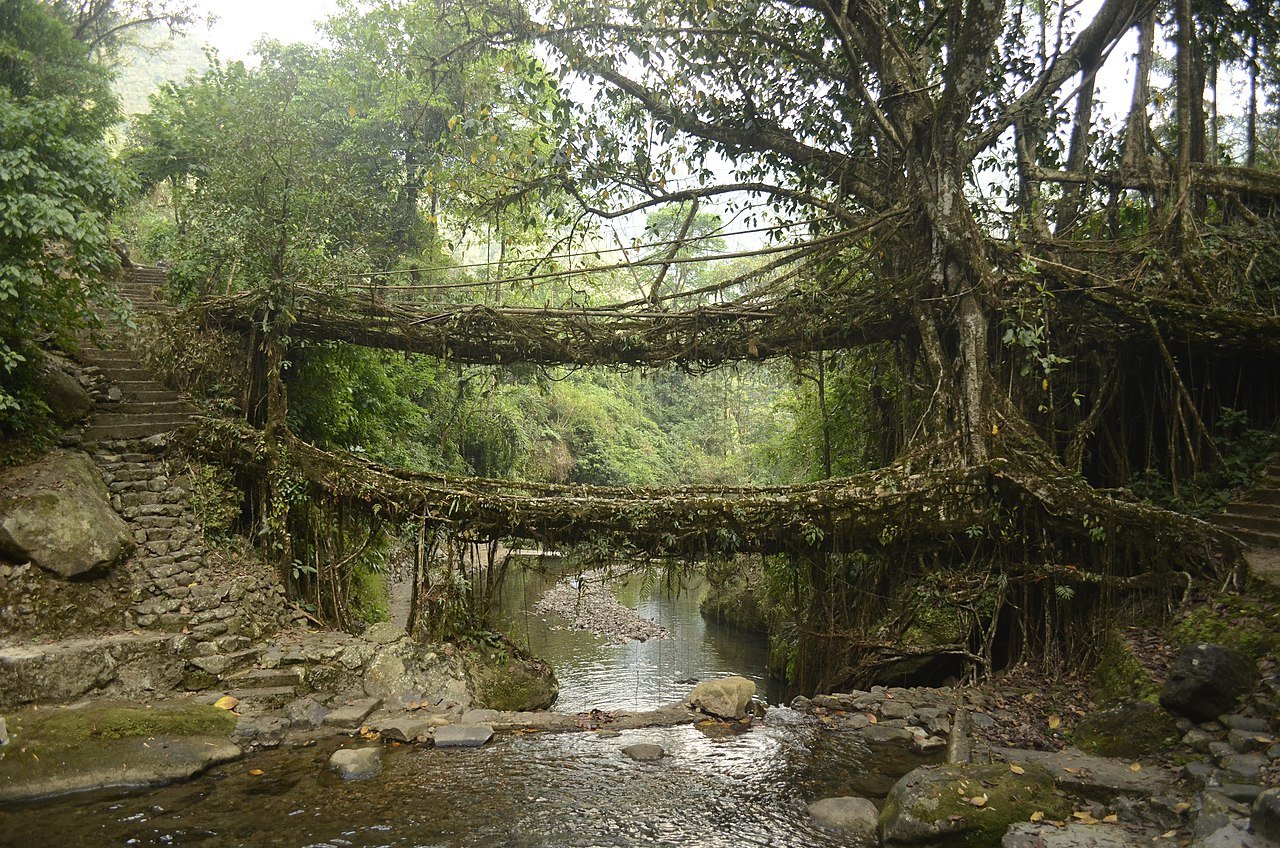
The crown jewels are the living root bridges, handwoven over decades from the aerial roots of rubber fig trees by the local Khasi people. The famous Double Decker Living Root Bridge in Nongriat requires a demanding trek of thousands of steps down and back up, rewarding fit travellers with a magical, otherworldly sight. Shorter, more accessible root bridges exist elsewhere for those who prefer an easier walk, but the Nongriat trek remains a bucket-list highlight of any Meghalaya trip.
Dawki, Mawlynnong and the East
Near the Bangladesh border, the village of Dawki is famed for the Umngot River, whose water is so astonishingly clear that boats appear to float on air above the visible riverbed — a sight that has made it one of Meghalaya’s most photographed spots. A boat ride here on a sunny day, when the water is at its clearest, is unforgettable.
Nearby, Mawlynnong proudly holds the title of Asia’s cleanest village, a spotless community of flower-lined lanes, bamboo dustbins and a living root bridge of its own, plus a sky-view bamboo platform offering views into Bangladesh. The surrounding region rewards slow exploration of traditional Khasi villages, balancing rivers, viewpoints and culture, and these eastern sights are often combined into a long day trip or an overnight stay from Cherrapunji or Shillong.
Caves and Adventure
Meghalaya is a caver’s paradise, home to some of the longest and deepest caves in the Indian subcontinent. The Mawsmai Cave near Cherrapunji is the most accessible and popular, illuminated and easy to walk through, offering a taste of the region’s underground wonders. More serious cavers can explore the vast Krem Liat Prah and Mawmluh cave systems with proper guides and equipment.
Beyond caving, the state offers excellent trekking — most famously to the Nongriat root bridges — as well as river kayaking at Dawki, zip-lining, camping by Umiam Lake, and exploring the David Scott Trail, a historic 16-kilometre route through beautiful countryside. Adventure seekers will find plenty to fill their days, while the scenery alone rewards even gentle exploration at a relaxed pace.
Food in Meghalaya
Khasi cuisine centres on rice, pork, chicken and fish, with signature dishes like jadoh (a flavourful rice-and-meat dish), dohneiiong (pork with black sesame) and various smoked and fermented preparations that reflect the region’s distinctive culinary traditions. Local markets and small eateries are the best places to sample authentic flavours, and the food is generally simple, hearty and warming in the cool climate.
Vegetarian travellers will find the choices more limited in traditional eateries, as meat features heavily, but Shillong and the larger towns have plenty of restaurants serving North and South Indian vegetarian fare, along with cafés offering familiar dishes. Carrying some snacks for long drives and remote treks is wise, and trying the local tea and seasonal fruits is a pleasant way to connect with the region’s produce.
Getting Around Meghalaya
A private car with a driver is by far the most practical way to explore Meghalaya, given that the main attractions are spread across winding hill roads and there is no convenient public transport network linking them. You can hire a taxi for the whole trip from Guwahati or Shillong, which gives you the flexibility to stop at waterfalls and viewpoints along the way.
Shared sumos and local taxis connect the main towns for budget travellers, but they are less convenient for reaching the scattered villages and natural sights. Roads are generally scenic but slow and twisting, so plan generous travel times and avoid overpacking your daily schedule. For the Nongriat root-bridge trek and other walks, you travel on foot from the nearest road head, so wear sturdy shoes and carry water.
Where to Stay
Shillong offers the widest range of accommodation, from budget guesthouses to comfortable mid-range hotels and a handful of upscale properties, making it the easiest base for the first part of a trip. Cherrapunji (Sohra) has a growing selection of resorts, homestays and guesthouses, ideal for being close to the waterfalls and root-bridge treks without a long daily commute.
For a more immersive experience, village homestays in places like Nongriat, Mawlynnong and around Dawki let you stay among the Khasi community and wake up surrounded by nature. These simple stays are part of the charm of Meghalaya and support local livelihoods. Book ahead during peak season and around festivals, as quality accommodation in the smaller villages is limited and fills quickly.
Sample 6-Day Meghalaya Itinerary
Fly into Guwahati and drive to Shillong, spending the first day or two exploring the city, Umiam Lake, Elephant Falls and the local markets. On the third day, head to Cherrapunji, taking in Nohkalikai Falls, the Seven Sisters Falls, Mawsmai Cave and the spectacular viewpoints, and stay overnight in the Sohra region.
Dedicate day four to the demanding but rewarding trek to the Double Decker Living Root Bridge in Nongriat. On day five, take a day trip to Dawki for a boat ride on the crystal-clear Umngot River and visit Mawlynnong, Asia’s cleanest village. Return to Shillong or Guwahati on day six for your departure flight. Adjust the pace if you prefer a gentler trip or want to add more caves and treks.
Practical Tips for Meghalaya
Carry sufficient cash, as ATMs are scarce outside Shillong and many homestays and rural establishments do not accept cards. Mobile connectivity can be patchy in remote villages and on treks, so download offline maps and inform family of likely limited reach. Pack layers for the cool, changeable mountain weather, a sturdy pair of trekking shoes, a rain jacket (essential in the wetter months) and a torch for caves.
Respect local customs and the environment: Meghalaya’s villages take great pride in cleanliness, so carry your litter out, avoid single-use plastics, and ask permission before photographing people. Start the Nongriat trek early to allow ample time for the steep return climb, carry water and snacks, and be prepared for leeches on monsoon trails. Booking transport and accommodation in advance during peak season ensures a smooth, stress-free trip.
Frequently Asked Questions
What is the best time to visit Meghalaya? October to May offers the most pleasant weather for sightseeing. The monsoon (June–September) brings spectacular waterfalls but heavy rain, leeches and slippery trails.
How do you reach Meghalaya? Fly into Guwahati in Assam, then take a scenic three-hour drive to Shillong. A private car is the most convenient way to explore the state’s scattered attractions.
Is the living root bridge trek difficult? The Double Decker bridge trek to Nongriat involves thousands of steps down and back up and is physically demanding. Easier, shorter root bridges exist for those wanting a gentler walk.
How many days are enough for Meghalaya? Five to six days lets you cover Shillong, Cherrapunji, the root bridges and the Dawki–Mawlynnong region comfortably without rushing the winding hill roads.
Is Meghalaya good for vegetarians? Traditional Khasi food is meat-heavy, but Shillong and larger towns have plenty of vegetarian Indian restaurants. Carrying snacks for remote areas is wise.
Meghalaya rewards travellers with a landscape found nowhere else in India — living root bridges, glass-clear rivers, towering waterfalls and Asia’s cleanest village, all wrapped in cool, misty hills. Visit in the drier months for comfortable sightseeing, hire a car to reach the scattered wonders, and embrace the local homestays, and this abode of clouds will leave a lasting impression.
Costs and Budget for a Meghalaya Trip
Meghalaya is an affordable destination once you reach Guwahati, with the flight to the Northeast usually being the largest expense. For a six-day trip, budget travellers relying on shared transport and homestays can manage on roughly ₹20,000–₹35,000 per person excluding flights, mid-range travellers hiring a private car and staying in comfortable hotels should plan ₹40,000–₹65,000, while those wanting upscale resorts and guided tours will spend more.
The biggest on-the-ground cost is transport, since a private car with a driver for several days is the most practical way to cover the state’s scattered attractions, though sharing the cost among a group makes it very reasonable. Accommodation in homestays and guesthouses is inexpensive, local food is cheap, and most natural attractions charge only modest entry or activity fees. Carrying sufficient cash is essential, as card acceptance and ATMs are limited outside Shillong.
Travel costs, road conditions and access can change, especially during the monsoon. The details here are 2026 estimates from public sources; verify current conditions, transport and accommodation before you travel, and always respect local customs and the environment.
Related reading: Andaman Islands Travel Guide 2026 — Beaches, Best Time, Permits & Itinerary · Goa Travel Guide 2026 — Best Beaches, Best Time, Things to Do & Itinerary · Varanasi Travel Guide 2026 — Ghats, Ganga Aarti, Best Time & Itinerary