Mahabalipuram Travel Guide 2026 — Shore Temple, Pancha Rathas, Beaches, Best Time & 2-Day Plan
Last updated: July 8, 2026
Mahabalipuram — officially Mamallapuram — is where Tamil Nadu’s coast meets 1,300 years of stone-carving genius. Strung along the Bay of Bengal about an hour south of Chennai, this small seaside town is a UNESCO World Heritage Site whose Pallava-era temples, monolithic chariots and giant open-air reliefs were chiselled from raw granite in the 7th and 8th centuries. Add a working community of sculptors, a long sandy beach and some of the best seafood on the Coromandel Coast, and you have one of South India’s most rewarding short breaks.
This 2026 guide for Indian travellers covers how to reach Mahabalipuram, the best time to go, what it costs, where to stay and eat, and how to see the monuments without melting in the midday sun — whether you come for a day trip or a relaxed overnight stay.
- Getting there: About 55–60 km south of Chennai on the scenic East Coast Road — roughly 1.5 hours by taxi or bus.
- Best time: November to February, when the coast is cool and dry; avoid the harsh April–June heat.
- Budget: ₹2,000–5,000 per day, with monument entry and a guide being modest add-ons.
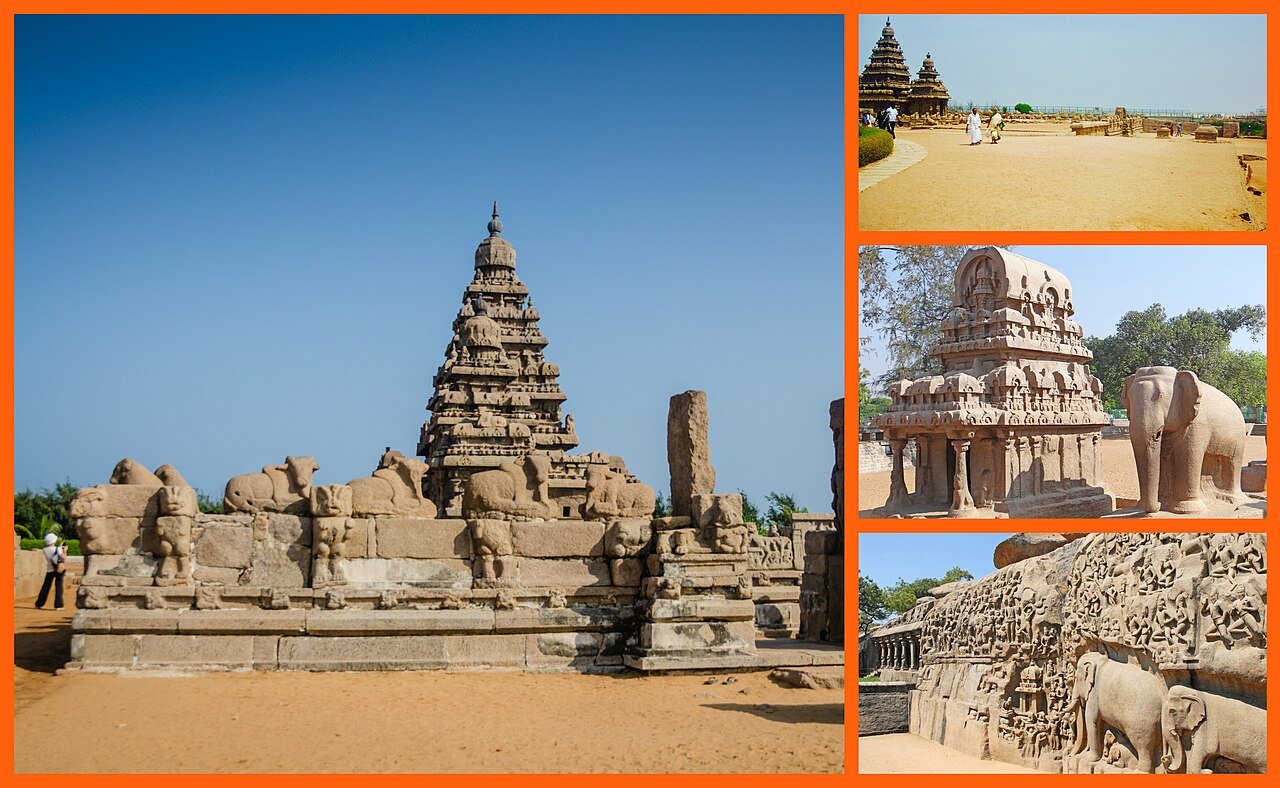
- Don’t miss: The Shore Temple at sunrise, the Pancha Rathas, Arjuna’s Penance and Krishna’s Butterball.
Part 1 of 8
Why Mahabalipuram is worth the trip
Few places let you walk straight up to monuments this old and this intact. The Pallava sculptors here didn’t build with blocks — they carved entire temples, chariots and mythological scenes out of single granite outcrops, leaving behind a sculpture park unlike anywhere else in India. It is compact, walkable and endlessly photogenic, and the sea breeze keeps it bearable even when the rest of Tamil Nadu is sweltering.
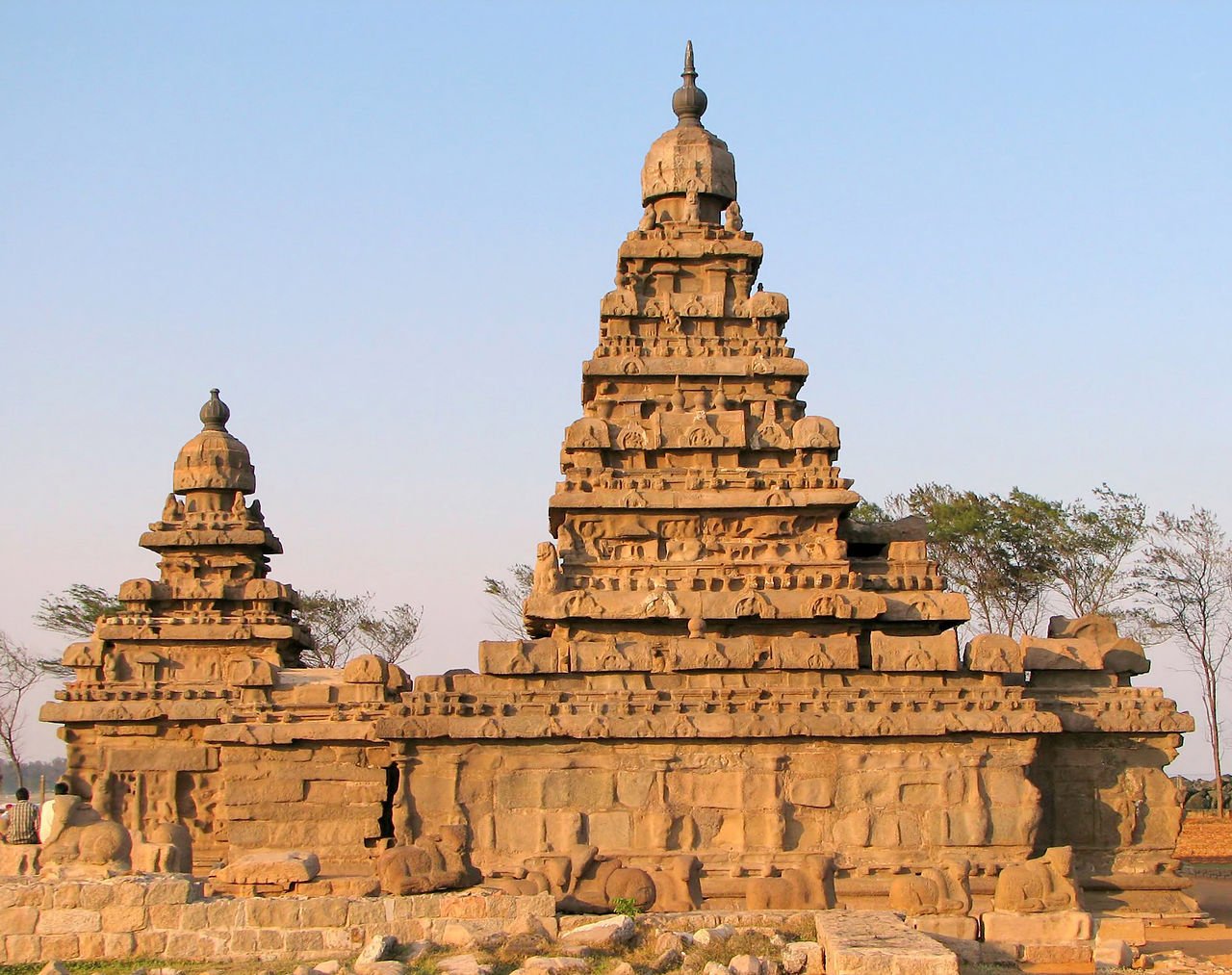
Shore Temple
A graceful 8th-century granite temple standing right at the water’s edge — magical at sunrise.
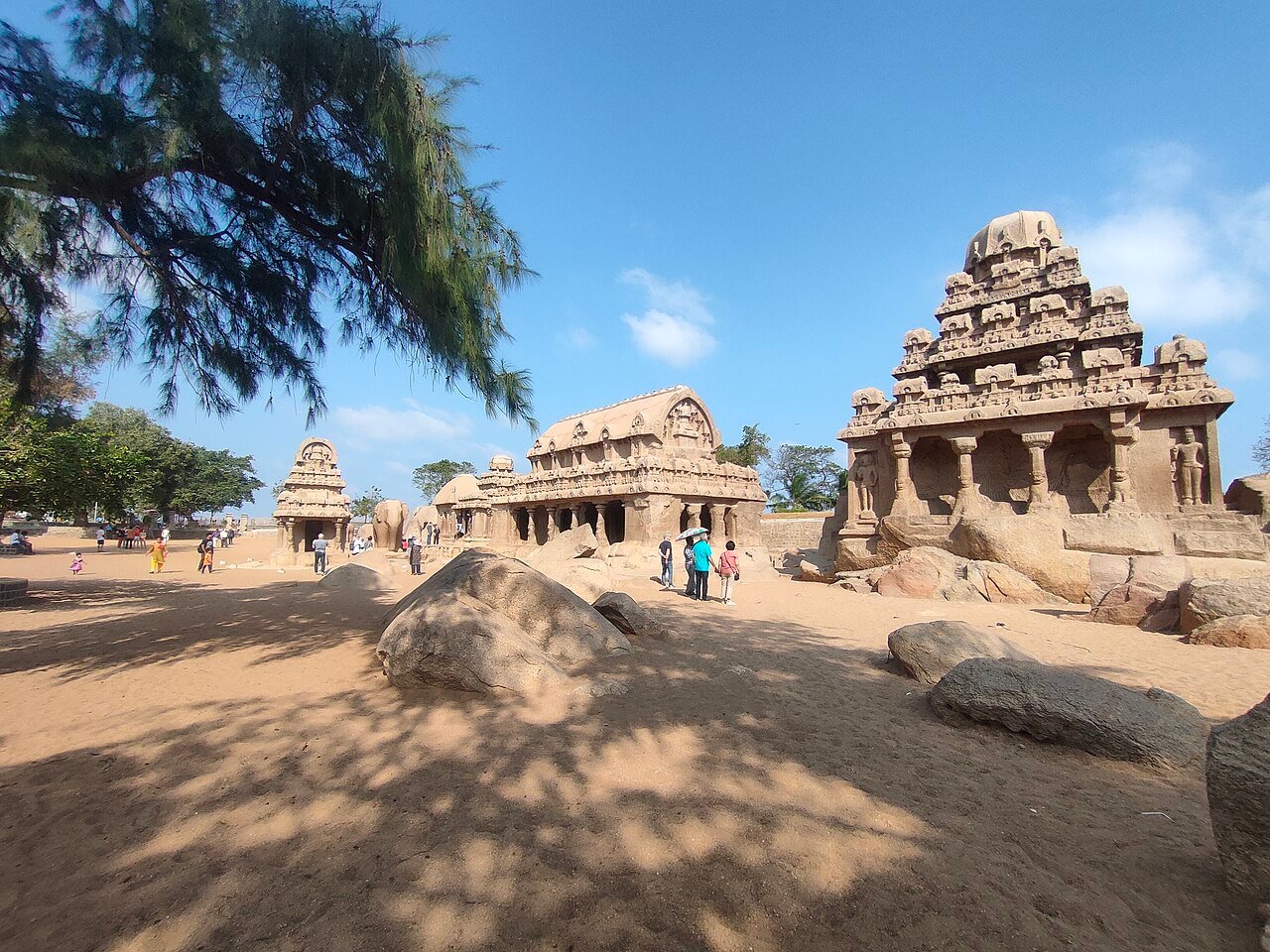
Pancha Rathas
Five monolithic “chariots”, each carved as a different temple style from a single rock.
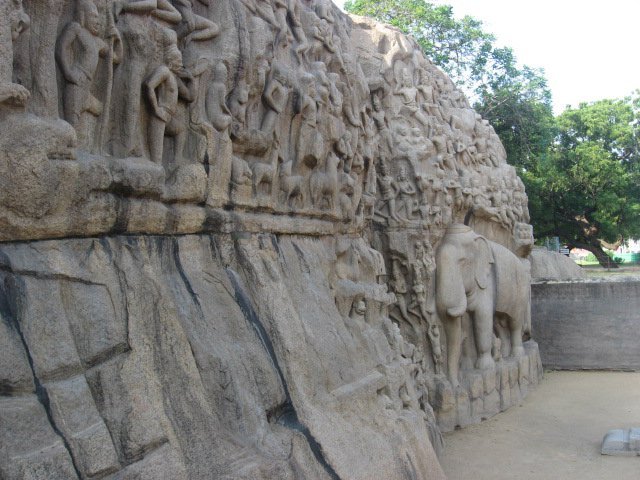
Arjuna’s Penance
One of the world’s largest open-air bas-reliefs, teeming with gods, sages and life-size elephants.
Krishna’s Butterball
A giant balancing boulder that has defied gravity — and bulldozers — for centuries.
Cave mandapas
Rock-cut shrines like the Mahishasuramardini cave, rich with mythological panels.
Beach & surf
A long sandy shore with seafood shacks, plus beginner-friendly surf nearby at Kovalam.
Because the core monuments sit within easy walking distance of each other, Mahabalipuram is one of the few heritage destinations you can genuinely cover on foot in a day — yet still want to linger for the food and the sea.
This is a place to slow down: carved gods on one side, the Bay of Bengal on the other, and a plate of fresh fish curry waiting in between.
Part 2 of 8
Getting to Mahabalipuram and getting around
Mahabalipuram is one of the easiest heritage sites in India to reach, thanks to its closeness to Chennai and the lovely coastal highway that links them.
By air: Chennai International Airport (MAA) is about 60 km away and well connected across India and abroad. From the airport, a taxi takes around 1.5 hours via the East Coast Road (ECR).
By road: The ECR drive is part of the appeal, running past beaches, art villages and the Muttukadu backwaters. State and private buses run frequently from Chennai’s Koyambedu and ECR routes, and taxis or app cabs are easy to arrange.
By train: There is no railway station in Mahabalipuram itself; the nearest railheads are Chengalpattu and Chennai, from where you continue by road.
Pro tip
Build in stops along the ECR — DakshinaChitra’s living-heritage museum and the Madras Crocodile Bank both make excellent breaks on the drive down from Chennai.
Getting around town: The monuments are clustered and best explored on foot or by bicycle, which many guesthouses rent out. Autos are handy for reaching the slightly outlying Tiger Cave or the lighthouse.
Part 3 of 8
Best time to visit Mahabalipuram
This is a coastal destination, so heat and humidity are the main things to plan around. The cool, dry winter months are ideal.
| Season | Months | What to expect |
|---|---|---|
| Winter | Nov–Feb | The best window — pleasant days, cool sea breeze and comfortable sightseeing. Peak tourist season. |
| Summer | Mar–Jun | Hot and humid, often above 35°C. Sightseeing is tiring; stick to early mornings and evenings. |
| Southwest spell | Jul–Sep | Warm with occasional showers; fewer crowds and lower prices. |
| NE monsoon | Oct–early Nov | Tamil Nadu’s main rains — atmospheric but wet, with the odd heavy downpour. |
If you can, time your visit for November through February. Within any season, plan the open-air monuments for sunrise or late afternoon — the granite radiates heat by midday, and the light is far better for photos at the edges of the day.
Part 4 of 8
Costs and budgeting for Indians
Mahabalipuram is gentle on the wallet, especially as a day trip from Chennai. Here is a realistic per-person, per-day guide for 2026.
| Style | Daily budget | What it covers |
|---|---|---|
| Day-tripper | ₹1,500–2,500 | Shared cab or bus from Chennai, monument entry, lunch at a seafood shack. |
| Mid-range | ₹3,000–5,000 | Overnight in a comfortable guesthouse or beach hotel, guide for the monuments, good meals. |
| Premium | ₹7,000+ | Beach resort, private car, guided heritage tour and fine seafood dining. |
The ASI charges a single modest ticket that covers the main monument group (the Shore Temple and Pancha Rathas), and a local guide for an hour or two is inexpensive and genuinely adds to the visit. Most of your budget will go on where you sleep and how you travel rather than on the sights themselves.
Good to know
Buy the combined ASI ticket online or at the counter and keep it — it is checked at more than one monument. Carry water and sunscreen; shade is limited around the open-air carvings.
Part 5 of 8
Where to stay, what to eat and top experiences
Where to stay: Backpackers and surfers gravitate to the budget guesthouses around Othavadai Street, close to the cafés and beach. Families and couples often prefer the beach resorts strung along the ECR just north of town, which offer pools and sea views.
What to eat: This is seafood country. Order grilled fish, prawns and crab at the beachside shacks, and don’t miss authentic Tamil meals — a banana-leaf thali, idli-dosa breakfasts and filter coffee. The traveller cafés around Othavadai also serve wood-fired pizzas and continental fare.
Sunrise at the temple
Catch first light on the Shore Temple before the day-trip buses arrive.
Sculpture workshop
Watch hereditary stone carvers at work and try your hand at a small piece.
Learn to surf
Beginner-friendly waves and surf schools at nearby Kovalam (Covelong) beach.
Croc Bank
A short hop up the ECR to one of the world’s largest reptile parks.
For a fuller trip, continue south to Pondicherry — its French Quarter and cafés are under two hours away and pair beautifully with Mahabalipuram’s heritage.
Part 6 of 8
How to plan your visit: day trip or overnight
Mahabalipuram works as both a quick day trip and a relaxed coastal break. Here is how to structure either.
The day trip (from Chennai): Leave the city early to reach the Shore Temple soon after it opens. Walk the main monument group — Shore Temple, Pancha Rathas, Arjuna’s Penance and Krishna’s Butterball — across the cooler morning hours, break for a seafood lunch, then explore the cave mandapas and lighthouse before driving back in the evening.
The overnight stay: Arrive in the afternoon, settle into a beach guesthouse and enjoy sunset and dinner by the sea. Devote the next morning to the monuments and a sculpture workshop, with the afternoon free for the beach or a surf lesson at Kovalam.
The coastal combo: Many travellers fold Mahabalipuram into a Chennai–Mahabalipuram–Pondicherry route over three to four days, adding the ECR’s art villages and Auroville for a complete Coromandel experience.
Pro tip
Weekends and public holidays bring big crowds from Chennai. Visit on a weekday if you can, and start at sunrise for the quietest, most atmospheric experience.
Part 7 of 8
Practical tips for Indian travellers
A little preparation makes a Mahabalipuram visit far more comfortable, mainly because you will be outdoors among sun-baked granite for much of the day.
Sun protection
Hat, sunglasses, sunscreen and a refillable water bottle are essential, even in winter.
Comfortable shoes
You will clamber over rock and walk between sites — skip the flip-flops for the carvings.
One combined ticket
The ASI ticket covers the main monuments and is checked more than once; keep it handy.
Hire a guide
A licensed guide brings the mythology of Arjuna’s Penance and the rathas vividly to life.
UPI and cards are widely accepted in cafés, hotels and shops, though small stalls and auto drivers still prefer cash, so carry some notes. The town is generally safe and easygoing, but as anywhere, keep an eye on belongings on the busy beach and bargain politely in the souvenir and sculpture shops.
Mahabalipuram’s location makes it a natural anchor for a wider Tamil Nadu trip. Chennai’s museums and temples lie just to the north, Kanchipuram’s silk and shrines are a manageable detour inland, and Pondicherry’s Franco-Tamil charm is an easy continuation south. Even two well-planned days here leave you with a satisfying mix of heritage, coast and cuisine.
Part 8 of 8
Frequently asked questions
Is Mahabalipuram doable as a day trip from Chennai?
Absolutely. With an early start you can comfortably see the main monuments, enjoy a seafood lunch and return the same evening. An overnight stay simply lets you add the beach, sunrise and a slower pace.
How much time do I need for the monuments?
The core group — Shore Temple, Pancha Rathas, Arjuna’s Penance and the caves — takes about three to four hours at a relaxed pace, ideally split across the cooler morning and late afternoon.
Is one ticket enough for all the sites?
The ASI combined ticket covers the principal monuments such as the Shore Temple and Pancha Rathas. Some open areas like Arjuna’s Penance and Krishna’s Butterball are free to view; keep your ticket as it is checked at more than one gate.
Can beginners surf at Mahabalipuram?
Yes — nearby Kovalam (Covelong) beach has gentle waves and surf schools that cater to first-timers, making it a fun half-day add-on to a heritage visit.
Is Mahabalipuram safe for solo and family travellers?
It is a relaxed, tourist-friendly town that suits solo travellers, couples and families alike. Take the usual precautions with valuables on the beach and while swimming, as currents can be strong.
What should I combine with Mahabalipuram?
Pondicherry to the south and Chennai to the north are the natural pairings, with stops like DakshinaChitra, the Crocodile Bank and Kanchipuram rounding out a classic Tamil Nadu coastal route.
Are photography and drones allowed at the monuments?
Still photography for personal use is fine across the site. Tripods and commercial shoots may need permission, and drones are generally not allowed around the ASI-protected monuments without prior clearance, so check before you fly one.
What souvenirs is Mahabalipuram known for?
The town’s hereditary sculptors sell beautiful granite and soapstone carvings, from small deities to large statues that can be shipped home. Bargain politely, and buy from established workshops where you can watch the artisans at work.
The bottom line
Mahabalipuram packs an astonishing amount into a small, walkable space — world-class ancient sculpture, a working stone-carving tradition, a breezy beach and excellent seafood, all an easy hour from Chennai. Come in the cooler months, start at sunrise, give yourself at least a full day, and consider extending south to Pondicherry. However you plan it, this slice of the Coromandel Coast delivers one of India’s most effortless heritage escapes. Pair it with great food, a sunrise by the sea and a short hop to Pondicherry, and a simple stop on the map becomes one of the most memorable couple of days of a South India trip.
Related reading
 Tirupati Darshan Booking Guide: Tirumala Made Simple (2026)
 Pondicherry Itinerary: 2-3 Day French Riviera Plan (2026)
 Tirupati Tirumala Darshan Plan: 2-Day Itinerary & Booking (2026)
Photos sourced from Wikimedia Commons under their respective Creative Commons licences. Travel details are indicative for 2026; confirm timings, fees and monument access locally before you travel.