Malaysian Food Guide 2026 — Nasi Lemak, Laksa & Veg-Friendly Eats
Malaysian food is one of Asia’s most exciting and underrated cuisines — a delicious melting pot of Malay, Chinese and Indian influences that makes it especially rewarding (and easy) for Indian travellers. From fragrant coconut rice to flaky flatbreads and rich curry noodles, Malaysia is a country where you can eat brilliantly, cheaply and often. This guide covers what to eat, the must-try dishes, vegetarian options, where to find the best food, and tips for eating your way through Malaysia.
What Malaysian food is all about
Malaysia’s cuisine reflects its multicultural society — three great food traditions (Malay, Chinese and Indian) living side by side and blending into something unique. Meals are built around rice, noodles, fresh herbs, coconut, chilli and aromatic spices, and the country’s hawker-stall culture means superb food is cheap and everywhere. For Indian travellers, the strong Indian-Malaysian influence means familiar flavours are never far away.
Must-try Malaysian dishes
Start with nasi lemak, the national dish — coconut rice with sambal, peanuts, egg and sides. Try laksa (a spicy-sour or coconut noodle soup, with famous regional versions), char kway teow (stir-fried flat noodles), satay (grilled skewers with peanut sauce), and roti canai (a flaky flatbread with dhal and curry — a beloved Indian-Malay breakfast). Don’t miss nasi kandar (rice with a choice of curries, of South Indian Muslim origin), and the tropical fruits, including the infamous durian.
Vegetarian options for Indians
Malaysia is one of the easier Southeast Asian countries for vegetarians, thanks to the strong Indian influence. You’ll find roti canai, dosa, idli, vegetable curries and banana-leaf rice at Indian-Malaysian eateries (especially in Little India areas), plus Chinese vegetarian (素食) restaurants and tofu/vegetable dishes. Nasi lemak and many noodle dishes can be made veg — just clarify about shrimp paste (belacan) and fish sauce, which are common. Strict vegetarians and Jains can eat very well with a little communication.
The hawker-centre experience
The heart of Malaysian eating is the hawker centre or food court — collections of stalls each specialising in one dish, where you order from several and share at a communal table. It’s cheap, delicious, safe at busy stalls, and the best way to sample widely. Penang’s hawker scene is legendary, but every city has great ones. Follow the queues and the locals to the best stalls.
Regional highlights
Penang is Malaysia’s food capital, famous for assam laksa, char kway teow and cendol. Kuala Lumpur offers the full multicultural spread and great Little India food. Malacca is known for Nyonya (Peranakan) cuisine, a unique Chinese-Malay blend. Ipoh is celebrated for its bean sprout chicken and white coffee. Eating regionally reveals the depth of Malaysian food.
What to drink
Cool down with teh tarik (“pulled” frothy milk tea, a national favourite), kopi (local coffee), fresh sugarcane and coconut juice, and the dessert-drink cendol (shaved ice with coconut milk, palm sugar and green jelly). These are cheap, refreshing and part of the experience.
Tips for eating in Malaysia
Eat at busy hawker stalls for the freshest food, carry small cash, and don’t be shy about pointing and sharing. Clarify vegetarian needs clearly (mention no belacan/fish sauce). Try a bit of everything — portions are small and cheap, so you can graze widely. Indian travellers will find Little India areas a reliable, familiar fallback anywhere in the country.
Frequently asked questions
Is Malaysian food good for vegetarians? Yes — the Indian influence means dosas, roti canai, veg curries and banana-leaf meals are widely available.
What’s the must-try dish? Nasi lemak, roti canai and a regional laksa are essentials.
Is hawker food safe? Yes, at busy, popular stalls with high turnover — it’s the best and cheapest way to eat.
Mamak culture and Indian-Malaysian food
For Indian travellers, Malaysia’s “mamak” stalls — open-air eateries run by the Indian-Muslim community — are a home away from home. Open late (often 24 hours), they serve roti canai, roti telur, thosai (dosa), nasi kandar, mee goreng and teh tarik at low prices in a buzzing, sociable atmosphere. The food is familiar yet distinctly Malaysian, and mamak stalls are woven into daily life across the country. Little India districts in Kuala Lumpur, Penang and Ipoh add banana-leaf rice, vegetarian thalis and South Indian sweets — making Malaysia exceptionally comfortable for Indian palates.
Nyonya (Peranakan) cuisine
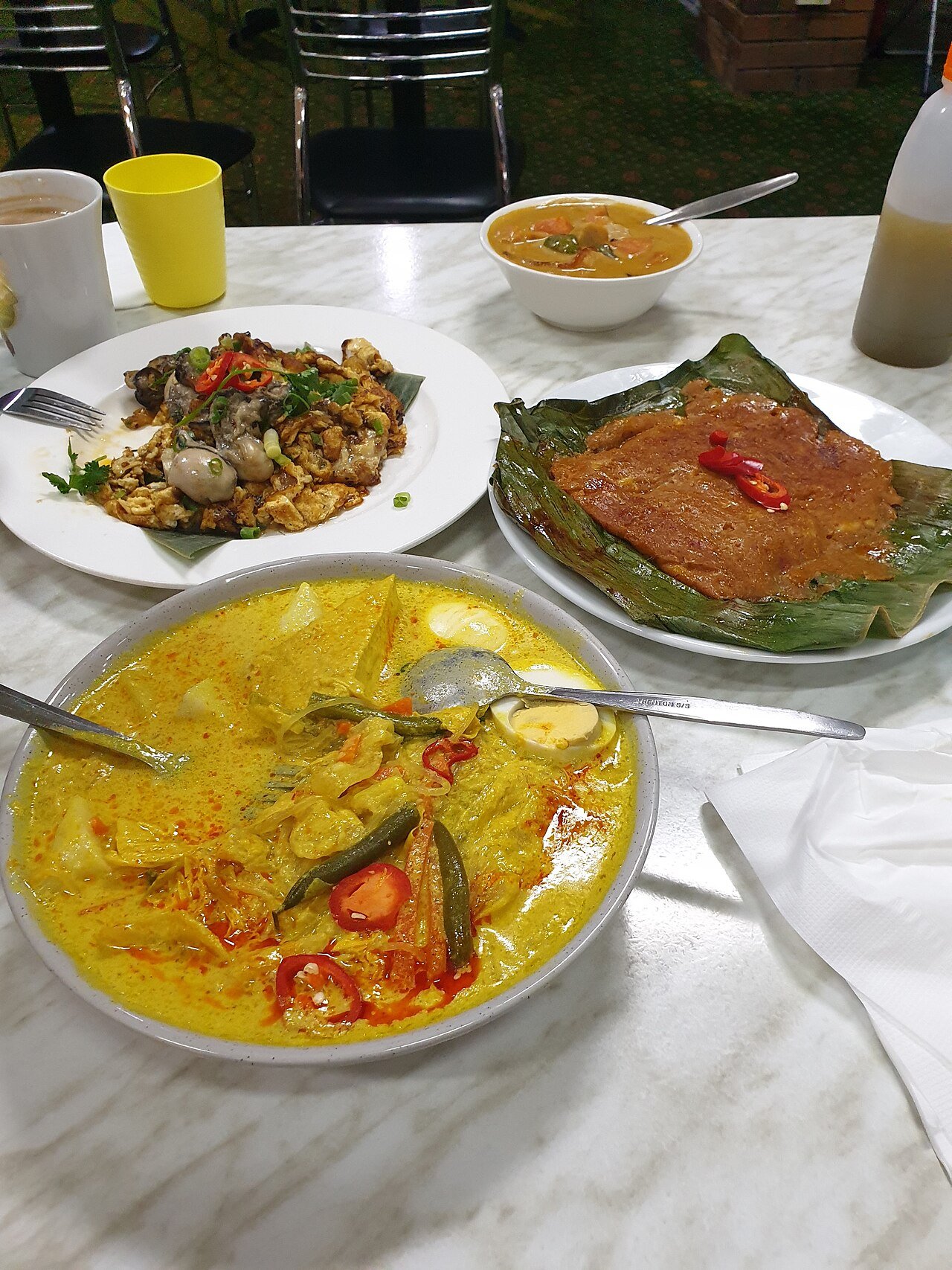
One of Malaysia’s most fascinating food traditions is Nyonya (Peranakan) cuisine, born of intermarriage between Chinese settlers and local Malays, especially in Malacca and Penang. It blends Chinese ingredients with Malay spices and techniques, producing dishes like laksa lemak, ayam pongteh, otak-otak and rich, aromatic curries, plus colourful kuih (bite-sized sweets). Seeking out a Nyonya restaurant in Malacca or Penang is a culinary highlight and a delicious window into Malaysia’s multicultural history.
Sweets, snacks and tropical fruit
Save room for Malaysia’s sweets and snacks. Cendol and ais kacang (shaved-ice desserts) cool you down; kuih (colourful steamed cakes) and apam balik (a stuffed pancake) are popular street treats; and tropical fruit abounds — mangosteen, rambutan, jackfruit and the notorious, pungent durian (the “king of fruits,” an acquired taste worth trying once). Pasar malam (night markets) are the best place to graze through these snacks and sweets cheaply.
A food tour, city by city
Plan your eating by city: Penang for assam laksa, char kway teow and the legendary hawker scene; Kuala Lumpur for the full multicultural spread and Little India; Malacca for Nyonya cuisine and chicken-rice balls; Ipoh for bean-sprout chicken and white coffee. Each has its own specialities and famous stalls, so eating your way across Malaysia is a journey in itself — and because food is so cheap, you can sample widely without spending much.
More frequently asked questions
What are mamak stalls? Indian-Muslim run open-air eateries serving roti canai, dosa, nasi kandar and teh tarik — cheap, late-night and very Indian-friendly.
What is Nyonya food? A unique Chinese-Malay (Peranakan) cuisine found especially in Malacca and Penang.
Should I try durian? If you’re adventurous, yes — once; its strong smell divides opinion but it’s a Malaysian icon.
Where’s the best food in Malaysia? Penang is widely considered the food capital, but every city has superb hawker fare.
How and where to eat: hawker etiquette
Eating at a Malaysian hawker centre is simple once you know the flow: grab a table (leaving a packet of tissues “reserves” it, a local custom), then order from individual stalls, paying each as you go; drinks usually come from a separate drinks stall. Dishes arrive at your table. It’s casual, communal and cheap. Don’t hesitate to share a table with strangers — it’s normal. Tap water isn’t typically served, so order a drink. Busy stalls with long local queues are your guarantee of quality and freshness.
Best time and festivals for food
Malaysia eats well year-round, but festivals add a delicious dimension. During Ramadan, spectacular Ramadan bazaars appear with a huge spread of Malay snacks and dishes for iftar. Chinese New Year, Deepavali and Hari Raya each bring special foods and open houses. Night markets (pasar malam) rotate through neighbourhoods on set evenings — a fantastic, cheap way to graze. Timing a visit with a festival means even more variety, though some family-run stalls close on the actual holiday.
A note for Indian travellers
Few cuisines are as welcoming to Indians as Malaysia’s. The Indian-Malaysian community means dosa, idli, roti canai, banana-leaf rice and vegetarian thalis are everywhere, mamak stalls serve familiar food late into the night, and spice levels suit Indian palates. Vegetarians and even Jains can eat very comfortably with a little communication (watch for belacan/shrimp paste in Malay and Chinese dishes). Combined with the affordability and English being widely spoken, Malaysia is one of the easiest food destinations for Indian travellers.
The bottom line
Malaysian food is a highlight of any trip — a cheap, varied, three-cultures-in-one feast best enjoyed at hawker centres and mamak stalls, eaten little and often. Try the national dishes, seek out regional and Nyonya specialities, embrace the street snacks and sweets, and lean on the Indian-Malaysian scene for familiar comfort. Follow the crowds, share tables, and graze widely — you’ll eat brilliantly for very little.
The food traveller’s verdict on Malaysia
Few destinations reward eaters as generously as Malaysia. The combination of three great cuisines, a thriving hawker culture, rock-bottom prices and a strong Indian-friendly streak makes it one of the best-value, most accessible food trips for Indian travellers. Plan your days around eating — a roti canai breakfast, a hawker-centre lunch of laksa and char kway teow, an afternoon teh tarik, a Nyonya or nasi kandar dinner, and night-market snacks — and you’ll experience the country at its most authentic. Follow the crowds, share tables, try the regional specialities, and don’t leave without a teh tarik in hand and (if you’re brave) a taste of durian.
More for your trip: see the vegetarian travel guide and more food & culture guides.
Last updated: June 2026.
Related reading: Dubai Food Guide 2026 — What & Where to Eat (Veg-Friendly Picks) · Singapore Food Guide 2026 — Hawker Eats & Vegetarian Picks for Indians · Sri Lankan Food Guide 2026 — Rice & Curry, Hoppers, Kottu (+ Veg Tips)