Camera Gear for Travel Photography 2026 — What to Pack & How to Choose
Last updated: June 29, 2026
Travel and photography go hand in hand, and capturing the places, people and moments of your journeys is one of the great joys of seeing the world. But choosing what camera gear to bring can be surprisingly tricky — too little and you miss shots you will treasure, too much and you are weighed down by heavy equipment you rarely use, spending more time managing gear than enjoying the trip. The right kit strikes a balance, matching your photography ambitions, your travel style and the weight you are willing to carry.
This guide helps you decide what camera gear to pack for travel photography, covering the spectrum from smartphone photography to dedicated cameras and lenses, the essential accessories worth carrying, how to protect and back up your images, and practical packing advice. Rather than recommending specific models, which date quickly, it focuses on the enduring principles of building a travel photography kit, so you can capture stunning images of your adventures with gear that suits you without becoming a burden.
Smartphone vs Dedicated Camera
The first decision is whether your smartphone is enough or whether you want a dedicated camera. Modern smartphones have remarkable cameras capable of stunning photos and videos, are always with you, and keep your kit ultra-light, making them the ideal choice for casual travellers, those prioritising packing light, and many situations where a big camera would be cumbersome or intrusive. For a great many travellers, a good phone is genuinely all they need.
A dedicated camera, however, offers advantages serious photographers value: superior image quality especially in low light, optical zoom, interchangeable lenses, more creative control, and better performance for challenging subjects like wildlife, sports and night scenes. The trade-off is weight, bulk and cost. Be honest about your interest and how much gear you will realistically carry and use — many travellers are happiest with their phone, while keen photographers will find a dedicated camera worth the extra weight.
Types of Travel Cameras
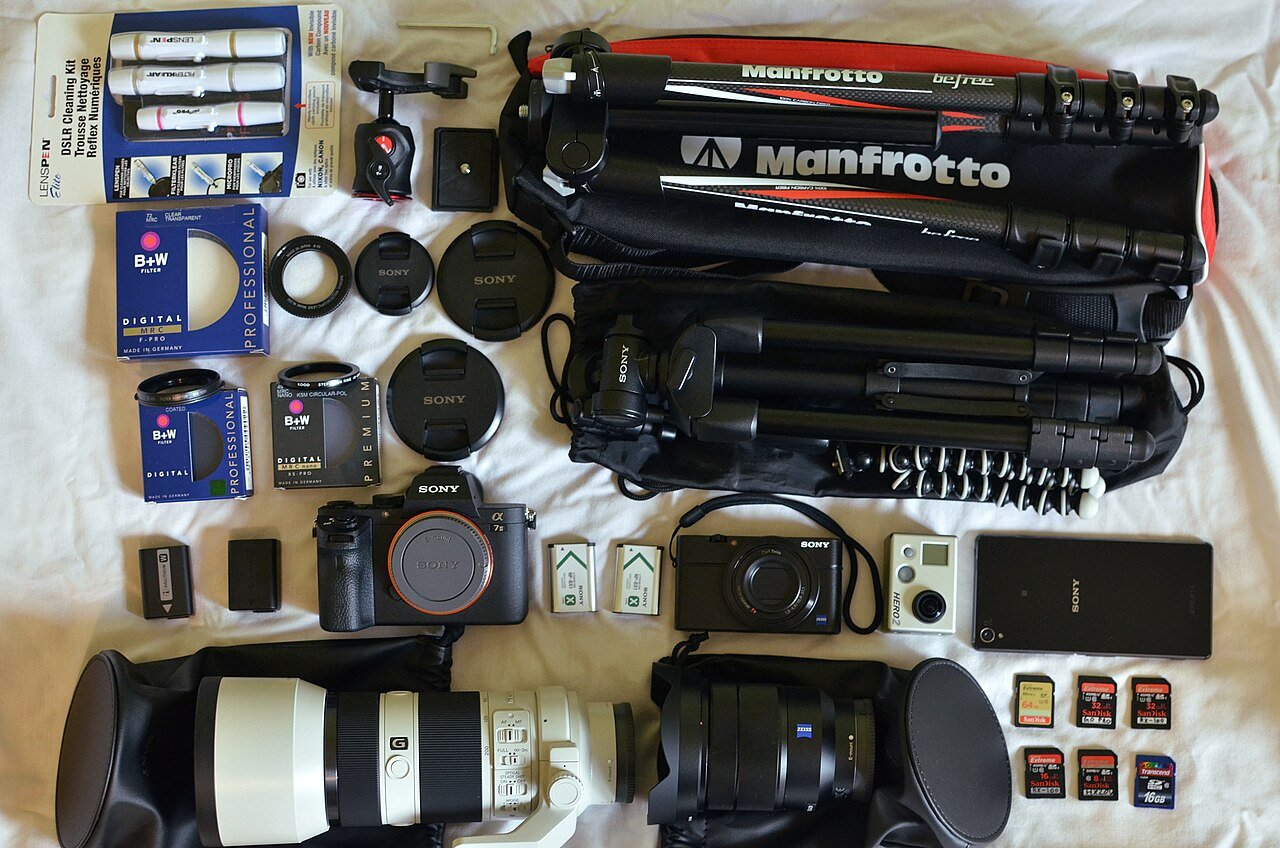
If you opt for a dedicated camera, several types suit travel. Compact point-and-shoot cameras are small, simple and pocketable, offering better zoom than phones in a lightweight package, ideal for those wanting a step up without bulk. Mirrorless cameras have become the favourite of travel photographers, offering excellent image quality and interchangeable lenses in a more compact, lighter body than traditional DSLRs.
DSLRs still offer superb quality and versatility but are heavier and bulkier, making them less ideal for light travel. Action cameras are small, rugged and waterproof, perfect for adventure, underwater and point-of-view footage, while bridge cameras offer huge zoom ranges in one fixed-lens body. For most travellers wanting dedicated-camera quality without excessive weight, a mirrorless camera or a high-quality compact strikes the best balance between performance and portability for travel photography.
Choosing Lenses for Travel
For interchangeable-lens cameras, lens choice greatly affects both your results and how much you carry. The key principle for travel is versatility and minimalism: rather than packing many specialised lenses, a single versatile zoom lens (often called a travel or all-in-one zoom) covering a wide range from wide-angle to telephoto lets you handle most situations — landscapes, street scenes, portraits and some distant subjects — without changing lenses, keeping your kit light and ready.
Keen photographers might add a fast prime lens for low light and portraits with beautiful background blur, or a wider or longer lens for specific interests like landscapes or wildlife, but each extra lens adds weight and bulk. Consider what you most love to photograph and choose lenses accordingly, resisting the urge to carry every option. For most travellers, one versatile zoom plus perhaps one prime covers the vast majority of shots while keeping the bag manageable.
Essential Accessories
A few accessories make a big difference to travel photography. Spare batteries and plenty of memory cards are essential, as running out of power or storage at a key moment is a real risk, especially in cold weather which drains batteries faster or in remote areas without charging. A lightweight, sturdy travel tripod enables sharp low-light shots, long exposures, time-lapses and self-portraits, and is invaluable for landscape and night photography.
Other useful accessories include a good camera bag or insert that protects your gear and is comfortable to carry, lens-cleaning cloths and a blower for dust, and protective filters for your lenses. A remote shutter release or using your camera’s timer or app helps with long exposures and group shots. Choose accessories based on the photography you actually do, prioritising the genuinely useful — spare power, storage and a tripod for many — over gadgets you will rarely use.
Making the Most of Your Smartphone
For those travelling with just a smartphone, a few additions and techniques elevate your photography. A small clip-on lens can add wide-angle or macro capability, a compact phone tripod with a remote enables stable shots, long exposures, time-lapses and self-portraits, and a power bank keeps you shooting all day. Learning to use your phone’s manual or pro mode, exposure controls and editing tools dramatically improves your results.
Beyond gear, technique matters most: understand composition basics like the rule of thirds and leading lines, shoot in good light (the soft golden hours around sunrise and sunset are magical), get close to your subjects, and take your time with important shots. Editing apps let you enhance images on the go. A smartphone in skilled hands, with a few key accessories, captures travel images that rival far heavier setups, all while keeping your kit feather-light.
Protecting Your Gear
Camera gear represents a significant investment and is vulnerable while travelling, so protecting it matters. Use a well-padded, comfortable camera bag that does not scream “expensive camera” to opportunistic thieves, keep gear secure and never leave it unattended, and be discreet when carrying valuable equipment in crowded or higher-risk areas. Consider travel insurance that covers your photography gear against theft, loss and damage.
Protect your equipment from the elements too: dust, sand, rain, humidity and extreme temperatures can all damage cameras. Carry a rain cover or use a waterproof bag in wet conditions, protect against sand at beaches and deserts, let gear acclimatise gradually to avoid condensation when moving between temperature extremes, and use lens caps and filters to guard against scratches. A little care in protecting your gear from both theft and the environment ensures it keeps performing throughout your travels.
Backing Up Your Photos
Your travel photos are often irreplaceable memories, so backing them up is crucial in case a card fails or a device is lost or stolen. Adopt a backup routine while travelling: regularly copy your photos from memory cards to a second location, such as a laptop, a portable hard drive or SSD, or cloud storage when you have a good connection. Relying on a single copy on one memory card or device is a risk not worth taking.
Carrying multiple memory cards and rotating them, rather than reusing one, provides a measure of redundancy, and keeping backups in a separate physical location from your camera protects against loss or theft of the whole bag. Cloud backups, where connectivity allows, offer offsite protection. Building a simple, consistent backup habit into your daily routine on the road ensures that even if disaster strikes your gear, your precious images and memories survive.
Packing Your Camera Gear
How you pack camera gear affects both protection and convenience. Use a dedicated camera bag or a padded insert within a regular backpack to cushion your equipment, organise lenses and accessories, and allow quick access to your camera when a shot presents itself. Keep your camera readily accessible rather than buried, so you do not miss spontaneous moments, while keeping it secure and protected.
Crucially, always carry your camera gear, spare batteries and memory cards in your hand luggage, never in checked baggage that could be lost, damaged or stolen, and note that spare lithium batteries must travel in the cabin. Balance the desire to capture everything against the weight you will carry all day, and resist over-packing gear. A well-organised, protected and sensibly sized camera kit lets you focus on creativity rather than logistics throughout your travels.
Balancing Photography and Experience
An important and often overlooked aspect of travel photography is balancing capturing the moment with actually living it. It is easy to spend a trip viewing everything through a lens, fiddling with settings and chasing the perfect shot, only to realise you barely experienced the places you visited. The best travel photographers learn to be present, putting the camera down at times to simply absorb and enjoy a place with their own eyes.
Find a rhythm that works for you: perhaps dedicating focused time to photography in the best light, then setting the camera aside to immerse yourself in the experience. Respect local people and customs when photographing, always asking permission for portraits and being sensitive at sacred or private places. Remember that the goal is to enhance and preserve your memories, not to let gear and image-making overshadow the very experiences you travelled to have.
Building Your Travel Photography Kit
To build the right kit, start by honestly assessing your interest and travel style. Casual travellers and those prioritising light packing may be perfectly served by their smartphone plus a small tripod and power bank. Enthusiasts will likely choose a mirrorless camera with a versatile zoom lens, spare batteries, memory cards and a travel tripod, adding a prime or specialist lens only if their photography genuinely calls for it.
Whatever you choose, prioritise versatility and portability over carrying every possible option, invest in protecting and backing up your gear and images, and keep refining your kit based on what you actually use after each trip. The best camera gear for travel is the kit you will happily carry and use, that captures the images you want without becoming a burden. Match it to your real needs, and your photography will beautifully preserve the memories of your journeys.
Frequently Asked Questions
Is a smartphone good enough for travel photography? For many travellers, yes. Modern smartphones take excellent photos, are always with you and keep your kit light. Keen photographers wanting more quality, zoom and control may prefer a dedicated camera.
What is the best camera type for travel? Mirrorless cameras are the favourite for travel, offering excellent quality and interchangeable lenses in a compact, light body. High-quality compacts and action cameras also suit specific needs.
What lens should I bring for travel? A single versatile zoom (all-in-one travel lens) covers most situations and keeps your kit light. Add a fast prime for low light and portraits only if your photography calls for it.
Can camera batteries go in checked luggage? Spare lithium batteries must travel in your cabin baggage, not checked. Always carry your camera, batteries and memory cards in hand luggage to protect them.
How do I back up travel photos? Regularly copy photos to a second location — a laptop, portable drive or cloud storage — rotate multiple memory cards, and keep backups separate from your camera to guard against loss or theft.
The best travel photography gear is the kit that matches your genuine interest and travel style while never becoming a burden — for many that is a capable smartphone, for enthusiasts a mirrorless camera with a versatile zoom. Whatever you choose, prioritise portability, protect and back up your gear and images, and above all remember to put the camera down sometimes and simply experience the wonderful places you have travelled to see.
Photography Etiquette and Respect
Good travel photography is not only about gear and technique but also about behaving respectfully towards the people and places you photograph. Always ask permission before taking close-up photos of local people, especially in traditional communities, and respect a refusal graciously; a smile and a gesture towards your camera usually communicates the request even across a language barrier. Be sensitive at religious sites, ceremonies and memorials, where photography may be restricted or inappropriate, and obey all posted rules and signs.
Be mindful too of not intruding on people’s privacy or daily lives purely for a striking shot, of not paying children for photos in ways that encourage begging, and of the ethics of photographing poverty or sensitive situations. In crowded attractions, be considerate of other visitors rather than monopolising a spot for the perfect picture. Approaching travel photography with respect and cultural sensitivity not only is the right thing to do but also leads to more genuine, meaningful images and warmer interactions.
Camera technology, airline battery rules and product availability change over time. This guide offers general, brand-neutral advice; always check current airline regulations on batteries and equipment, and choose gear suited to your own needs and budget.
Related reading: Travel Photography Gear & Tips for Beginners 2026 · Winter Travel Packing & Gear Guide 2026 — Stay Warm, Pack Light · Best Carry-On Luggage Guide 2026 — How to Choose & Pack Smart